Thursday, June 5, 2014

65 Things Learned from Hero Edward Snowden

June 5, 2014 | By Nadia Kayyali and Katitza Rodriguez

65 Things We Know About NSA Surveillance That We Didn’t Know a Year Ago

It’s been one year since the Guardian first published the Foreign Intelligence Surveillance Court order, leaked by former NSA contractor Edward Snowden, that demonstrated that the NSA was conducting dragnet surveillance on millions of innocent people. Since then, the onslaught of disturbing revelations, from disclosures, admissions from government officials, Freedom of Information Act requests, and lawsuits, has been nonstop. On the anniversary of that first leak, here are 65 things we know about NSA spying that we did not know a year ago:
1. We saw an example of the court orders that authorize the NSA to collect virtually every phone call record in the United States—that’s who you call, who calls you, when, for how long, and sometimes where.
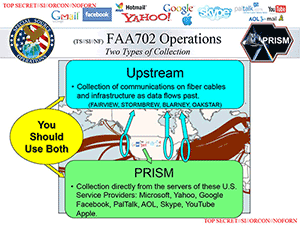
2. We saw NSA Powerpoint slides documenting how the NSA conducts “upstream” collection, gathering intelligence information directly from the infrastructure of telecommunications providers.Prsim/Upstream slide
3. The NSA has created a “content dragnet” by asserting that it can intercept not only communications where a target is a party to a communication but also communications “about a target, even if the target isn’t a party to the communication.”
4. The NSA has confirmed that it is searching data collected under Section 702 of the FISA Amendments Act to access American’s communications without a warrant, in what Senator Ron Wyden called the "back door search loophole."
5. Although the NSA has repeatedly stated it does not target Americans, its own documents show that searches of data collected under Section 702 are designed simply to determine with 51 percent confidence a target’s “foreignness.’”
 6. If the NSA does not determine a target’s foreignness, it will not stop spying on that target. Instead the NSA will presume that target to be foreign unless they “can be positively identified as a United States person.”
7. A leaked internal NSA audit detailed 2,776 violations of rules or court orders in just a one-year period.
8. Hackers at the NSA target sysadmins, regardless of the fact that these sysadmins themselves may be completely innocent of any wrongdoing.
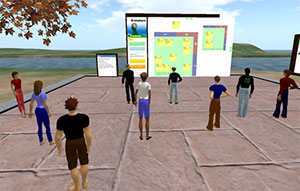
Second LIfe9. The NSA and CIA infiltrated games and online communities like World of Warcraft and Second Life to gather data and conduct surveillance.
10. The government has destroyed evidence in EFF’s cases against NSA spying. This is incredibly ironic, considering that the government has also claimed EFF’s clients need this evidence to prove standing.
11. Director of National Intelligence James Clapper lied to Congress when asked directly by Sen. Ron Wyden whether the NSA was gathering any sort of data on millions of Americans.
12. Microsoft, like other companies, has cooperated closely with the FBI to allow the NSA to “circumvent its encryption and gain access to users’ data.”
13. The intelligence budget in 2013 alone was $52.6 billion— this number was revealed by a leaked document, not by the government. Of that budget, $10.8 billion went to the NSA. That’s approximately $167 per person in the United States.
14. The Foreign Intelligence Surveillance Court has issued orders that allow the NSA to share raw data—without personally identifying information stripped out— with the FBI, CIA, and the National Counterterrorism Center.
15. Pursuant to a memorandum of understanding, the NSA regularly shares raw data with Israel without stripping out personally identifying information about U.S. persons.
16. The Snowden disclosures have made it clear the Obama administration misled the Supreme Court about key issues in ACLU’s case against NSA spying, Clapper v. Amnesty International, leading to the dismissal of the case for lack of standing.
17. The NSA “hacked into Al Jazeera's internal communications system.” NSA documents stated that “selected targets had ‘high potential as sources of intelligence.’”
18. The NSA used supposedly anonymous Google cookies as beacons for surveillance, helping them to track individual users.
pixelated face19. The NSA “intercepts ‘millions of images per day’ — including about 55,000 ‘facial recognition quality images’” and processes them with powerful facial recognition software.
20. The NSA facial recognition program “can now compare spy satellite photographs with intercepted personal photographs taken outdoors to determine the location.”
21. Although most NSA reform has focused on Section 215 of the PATRIOT Act, and most advocates have also pushed for reform of Section 702 of the FISA Amendments Act, some of the worst NSA spying happens under the authority of Executive Order 12333, which President Obama could repeal or modify today.
22. The NSA collected Americans’ cell phone location information for two years as part of a pilot project to see how it could use such information in its massive databases.
23. In one month, March 2013, the NSA collected 97 billion pieces of intelligence from computer networks worldwide, including 3 billion pieces of intelligence from US computer networks.
Tor Logo24. The NSA has targeted Tor, a set of tools that allow Internet users to browse the net anonymously.
25. The NSA program MUSCULAR infiltrates links between the global data centers of technology companies such as Google and Yahoo. Many companies have responded to MUSCULAR by encrypting traffic over their internal networks.
26. The XKEYSCORE program analyzes emails, online chats and the browsing histories of millions of individuals anywhere in the world.
27. NSA undermines the encryption tools relied upon by ordinary users, companies, financial institutions, targets, and non-targets as part of BULLRUN, an unparalleled effort to weaken the security of all Internet users, including you.
28. The NSA’s Dishfire operation has collected 200 million text messages daily from users around the globe, which can be used to extract valuable information such as location data, contact retrievals, credit card details, missed call alerts, roaming alerts (which indicate border crossings), electronic business cards, credit card payment notifications, travel itinerary alerts, and meeting information.
29. Under the CO-TRAVELER operation, the US collects location information from global cell towers, Wi-Fi, and GPS hubs, which is then information analyzed over time, in part in order to determine a target’s traveling companions.
30. A 2004 memo entitled “DEA- The ‘Other’ Warfighter”, states that the DEA and NSA “enjoy a vibrant two-way information-sharing relationship.”DEA Badge
31. When the DEA acts on information its Special Operations Division receives from the NSA, it cloaks the source of the information through “parallel construction,” going through the charade of recreating an imaginary investigation to hide the source of the tip, not only from the defendant, but from the court. This was intended to ensure that no court rules on the legality or scope of how NSA data is used in ordinary investigations.   
32. The fruits of NSA surveillance routinely end up in the hands of the IRS. Like the DEA, the IRS uses parallel construction to cloak the source of the tip.
33. Even the President’s handpicked Privacy and Civil Liberties Oversight Board recommended that the government end Section 215 mass telephone records collection, because that collection is ineffective, illegal, and likely unconstitutional.
34. The NSA has plans to infect potentially millions of computers with malware implants as part of its Tailored Access Operations.
35. The NSA had a secret $10 million contract with security firm RSA to create a “back door” in the company’s widely used encryption products.
36. The NSA tracked access to porn and gathered other sexually explicit information “as part of a proposed plan to harm the reputations of those whom the agency believes are radicalizing others through incendiary speeches.”
37. The NSA and its partners exploited mobile apps, such as the popular Angry Birds game, to access users’ private information such as location, home address, gender, and more.
38. The Washington Post revealed that the NSA harvests “hundreds of millions of contact lists from personal e-mail and instant messaging accounts around the world, many of them belonging to Americans.”
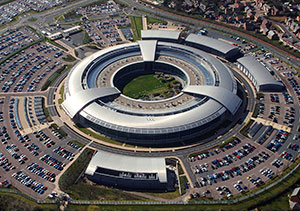
Many of the Snowden revelations have concerned the NSA’s activities overseas, as well as the activities of some of the NSA’s closest allies, such as the its UK counterpart GCHQ. Some of these have been cooperative ventures. In particular, the “Five Eyes”— The United States, New Zealand, Australia, the United Kingdom, and Canada— share citizen data amongst themselves - providing loopholes that might undermine national legislation.
 39. The NSA paid its British counterpart GCHQ $155 million over the last three years “to secure access to and influence over Britain's intelligence gathering programmes.”
40. The Guardian reported: “In one six-month period in 2008 alone, [GCHQ] collected webcam imagery – including substantial quantities of sexually explicit communications – from more than 1.8-million Yahoo user accounts globally.”GCHQ
41. GCHQ used malware to compromise networks belonging to the Belgian telecommunications company Belgacom.
42. Major telecommunications companies including BT, Vodafone, and Verizon business have given GCHQ unlimited access to their fiberoptic cables
43. GCHQ used DDoS attacks and other methods to interrupt Anonymous and LulzSec communications, including communications of people not charged with any crime.
44. GCHQ’s Bude station monitored leaders from the EU, Germany, and Israel. It also targeted non-governmental organizations such as Doctors of the World.
45. The NSA’s partners Down Under, the Australian Signals Directorate, has been implicated in breaches of attorney-client privileged communications, undermining a foundational principle of our shared criminal justice system.
46. Australian intelligence officials spied on the cell phones of Indonesian cabinet ministers and President Susilo Bambang.
47. In 2008, Australia offered to share its citizens’ raw information with intelligence partners.
48. CSEC helped the NSA spy on political officials during the G20 meeting in Canada.
49. CSEC and CSIS were recently rebuked by a federal court judge for misleading him in a warrant application five years ago with respect to their use of Five Eyes resources in order to track Canadians abroad.
Ironically, some of the NSA’s operations have been targeted at countries that have worked directly with the agency in other instances. And some simply seemed unnecessary and disproportionate.  
50. NSA documents show that not all governments are clear about their own level of cooperation with the NSA. As the Intercept reports, “Few, if any, elected leaders have any knowledge of the surveillance.”
51. The NSA is intercepting, recording, and archiving every single cell phone call in the Bahamas.
52. The NSA monitored phone calls of at least 35 world leaders.
53. The NSA spied on French diplomats in Washington and at the UN.
54. The NSA hacked in to Chinese company Huawei's networks and stole its source code.  
55. The NSA bugged EU embassies in both New York and Washington. It copied hard drives from the New York office of the EU, and tapped the internal computer network from the Washington embassies.
56. The NSA collected the metadata of more than 45-million Italian phone calls over a 30 day period. It also maintained monitoring sites in Rome and Milan.
57. The NSA stored data from approximately 500-million German communications connections per month.
58. The NSA collected data from over-60 million Spanish telephone calls over a 30-day period in late 2012 and early 2013 and spied on members of the Spanish government.
59. The NSA collected data from over 70-million French telephone calls over a 30-day period in late 2012 and early 2013.
60. The Hindu reported that, based on NSA documents: “In the overall list of countries spied on by NSA programs, India stands at fifth place.”
61. The NSA hacked into former Mexican President Felipe Calderon’s official email account.
62. The Guardian reported: “The NSA has, for years, systematically tapped into the Brazilian telecommunication network and indiscriminately intercepted, collected and stored the email and telephone records of millions of Brazilians.”
63. The NSA monitored emails (link in Portuguese), telephone calls, and text messages of Brazilian President Dilma Roussef and her top aides.
64. Germany’s intelligence agencies cooperated with the NSA and implemented the NSA’s XKeyscore program, while NSA was in turn spying on German leaders.
65. Norwegian daily Dagbladet reported (Link in Norwegian) that the NSA acquired data on 33 million Norwegian cell phone calls in one 30-day period.”
There’s no question that the international relationships Obama pledged to repair, as well as the confidence of the American people in their privacy and constitutional rights, have been damaged by the NSAs dragnet surveillance. But one year later, both the United States and international governments have not taken the steps necessary to ensure that this surveillance ends. That’s why everyone must take action— contact your elected representative, join Reset the Net, and learn about how international law applies to U.S. surveillance today. 


Wednesday, May 21, 2014

Texaco Polluted, But Chevron Must Pay.

Eva Golinger constata 'la mano de muerte de Chevron' en la selva amazónica de Ecuador

Publicado: 14 may 2014 | 11:22 GMT Última actualización: 14 may 2014 | 13:31 GMT


Texto completo en: http://actualidad.rt.com/actualidad/view/128034-ecuador-chevron-amazonas-contaminacion-texaco

Eva Golinger constata 'la mano de muerte de Chevron' en la selva amazónica de Ecuador

Publicado: 14 may 2014 | 11:22 GMT Última actualización: 14 may 2014 | 13:31 GMT


Texto completo en: http://actualidad.rt.com/actualidad/view/128034-ecuador-chevron-amazonas-contaminacion-texaco

Eva Golinger, host of the 'Behind the News' issued by RT traveled to the Amazon rainforest in Ecuador to see first hand the environmental damage caused in the region by U.S. oil company Chevron.

The Amazon is the lungs of South America, where there is an extraordinary nature and an immense wealth of strategic resources. The density of the forest, under the surface, is one of the world's most wanted resource : oil.
Called the 'devil's excrement' by Indigenous communities, the exploitation of oil in this continent has brought great benefits, such as development, but has also led to wars, invasions and severe ecological damage.
In Ecuador, where oil extraction today is a careful and environmentally friendly way, is the shadow of the past, when powerful transnationals used this land as their trash and backyard.
This is the case of U.S. oil Texaco, acquired by Chevron after that between 1972 and 1992 extracted 1.500 million barrels of oil from Ecuador; during intentionally poured 19,000 million gallons of waste in the region and shed 17,000 million gallons of oil. Some environmental organizations have described the situation as "the worst oil disaster in the world."
Texaco operated throughout the Amazon district about 300 wells, in each one of these wells had up to eight pools as toxic waste dump.
"Texaco operated throughout the Amazon district about 300 wells in each of these wells had up to eight pools as a toxic waste dump. Around two million hectares were contaminated this directly and indirectly by seepage of contaminated water" said Jose Luis Diaz, an expert from the Ministry of Environment of Ecuador.
Is the 'death hand Chevron', because in the affected areas and no life is a message from the people affected, who are simply seeking justice against a company that has taken advantage of financially area.
It is estimated that this contamination has claimed at least 1,400 lives in the region, discharges related diseases. Many indigenous and farmers are affected by Sequelae, including birth defects and cancers.
"Many of the early founders of our communities have died, among them also my father, who died of cancer," says one of the victims.
The American oil company has refused to pay compensation of $9,500 million, set by the Courts of Ecuador as part of a legal process initiated by Indians and settlers in the Ecuadorian Amazon, accusing the company of serious environmental damage left during the time it operated in that region.
Full text at: http://actualidad.rt.com/actualidad/view/128034-ecuador-chevron-amazonas-contaminacion-texaco

Friday, May 16, 2014

Pope Advocates Rich Pay Poor

Pope Francis calls for 'legitimate redistribution' of Wealth

The pope is known for promoting economic equality. He himself chooses to live simply in a modest apartment in the Vatican, without the adornments offered to popes.

VATICAN CITY, May 9 (UPI) --In a speech to the United Nations on Friday, Pope Francis called for countries to redistribute wealth to the poor and end the "economy of exclusion."

The Pope, who has frequently slammed capitalism as an unfair system, said governments can achieve more economic equality with "the legitimate redistribution of economic benefits by the state, as well as indispensable cooperation between the private sector and civil society."

The words were said to UN Secretary-General Ban Ki-moon and other top UN officials, who met in Rome this week.

Pope Francis encouraged the UN to challenge countries to attack the roots of poverty and guarantee dignified labor for all people.

"Specifically, this involves challenging all forms of injustices and resisting the economy of exclusion, the throwaway culture and the culture of death which nowadays sadly risk becoming passively accepted," he said.

Pope Francis been outspoken about the issues of inequality and poverty, and even chose the name "Francis" from Francis of Assisi, who dedicated his life to helping the poor.

The Pope spoke to U.S. President Barack Obama as well about these issues during the president's visit to the Vatican.  "Well we spent a bulk of our conversation around issues of poverty and inequality, themes that he has been talking about quite a bit," Obama told 60 Minutes' Scott Pelley. "And obviously issues that I care about deeply. The very poor finding fewer and fewer ladders to get into the middle class."  (thanks to you, President)

Ban invited the Pope to speak to the General Assembly in New York. The Church has not confirmed any trip, but it is widely expected that the pope will travel to the U.S. in September 2015 to participate in a church meeting on families in Philadelphia.

NATO & US Threatening World War


Break the Silence: A World War Is Beckoning

  By John Pilger, Truthout 

2014 0516 pilger main(Photo Illustration: Lance Page / t r u t h o u t)
Why do we tolerate the threat of another world war in our name? 
Why do we allow lies that justify this risk? 
The scale of our indoctrination, wrote Harold Pinter, is a "brilliant, even witty, highly successful act of hypnosis," as if the truth "never happened even while it was happening."

Every year the American historian William Blum publishes his "updated summary of the record of US foreign policy," which shows that since 1945 the US has tried to overthrow more than 50 governments, many democratically elected; grossly interfered in elections in 30 countries; bombed the civilian populations of 30 countries; used chemical and biological weapons, and attempted to assassinate foreign leaders.

In many cases, Britain has been a collaborator. The degree of human suffering, let alone criminality, is little acknowledged in the West, despite the presence of the world's most advanced communications and nominally freest journalism. That the most numerous victims of terrorism - "our" terrorism - are Muslims is unsayable. That extreme jihadism, which led to 9/11, was nurtured as a weapon of Anglo-American policy (Operation Cyclone in Afghanistan) is suppressed. In April the US state department noted that, following NATO's campaign in 2011, "Libya has become a terrorist safe haven."

The name of "our" enemy has changed over the years, from communism to Islamism, but generally it is any society independent of Western power and occupying strategically useful or resource-rich territory. 

The leaders of these obstructive nations are usually violently shoved aside, such as the democrats Muhammad Mossedeq in Iran and Salvador Allende in Chile, or they are murdered, like Patrice Lumumba in the Congo. All are subjected to a Western media campaign of caricature andvilification - think Fidel Castro, Hugo Chavez, and now Vladimir Putin.

Washington's role in Ukraine is different only in its implications for the rest of us. For the first time since the Reagan years, the US is threatening to take the world to War.  

With eastern Europe and the Balkans now military outposts of NATO, the last "buffer state" bordering Russia is being torn apart. We in the West are backing neo-Nazis in a country where Ukrainian Nazis backed Hitler.

Having masterminded the coup in February against the democratically elected government in Kiev, Washington's planned seizure of Russia's historic, legitimate warm-water naval base in Crimea failed. The Russians defended themselves, as they have done against every threat and invasion from the West for almost a century.

But NATO's military encirclement has accelerated, along with US-orchestrated attacks on ethnic Russians in Ukraine. If Putin can be provoked into coming to their aid, his pre-ordained "pariah" role will justify a NATO-run guerrilla War that is likely to spill into Russia itself.

Instead, Putin has confounded the War party by seeking an accommodation with Washington and the EU, by withdrawing troops from the Ukrainian border and urging ethnic Russians in eastern Ukraine to abandon the weekend's provocative referendum. These Russian-speaking and bilingual people - a third of Ukraine's population - have long sought a democratic federation that reflects the country's ethnic diversity and is both autonomous and independent of Moscow. Most are neither "separatists" nor "rebels" but citizens who want to live securely in their homeland.

Like the ruins of Iraq and Afghanistan, Ukraine has been turned into a CIA theme park - run by CIA Director John Brennan in Kiev, with "special units" from the CIA and FBI setting up a "security structure" that oversees savage attacks on those who opposed the February coup. Watch the videos, read the eyewitness reports from the massacre in Odessa this month. Bussed fascist thugs burned the trade union headquarters, killing 41 people trapped inside. Watch the police standing by. A doctor described trying to rescue people, "but I was stopped by pro-Ukrainian Nazi radicals. One of them pushed me away rudely, promising that soon me and other Jews of Odessa are going to meet the same fate ... I wonder, why the whole world is keeping silent."

Russian-speaking Ukrainians are fighting for survival. When Putin announced the withdrawal of Russian troops from the border, the Kiev junta's defense secretary - a founding member of the fascist Svoboda party - boasted that the attacks on "insurgents" would continue. In Orwellian style, propaganda in the West has inverted this to Moscow "trying to orchestrate conflict and provocation," according to William Hague. His cynicism is matched by Obama's grotesque congratulations to the coup junta on its "remarkable restraint" following the Odessa massacre. Illegal and fascist-dominated, the junta is described by Obama as "duly elected." What matters is not truth, Henry Kissinger once said, but "but what is perceived to be true."

In the US media the Odessa atrocity has been played down as "murky" and a "tragedy" in which "nationalists" (neo-Nazis) attacked "separatists" (people collecting signatures for a referendum on a federal Ukraine). Rupert Murdoch's Wall Street Journal damned the victims - "Deadly Ukraine Fire Likely Sparked by Rebels, Government Says." Propaganda in Germany has been pure cold war, with the Frankfurter Allgemeine Zeitung warning its readers of Russia's "undeclared war". For Germans, it is an invidious irony that Putin is the only leader to condemn the rise of fascism in 21st-century Europe.

A popular truism is that "the world changed" following 9/11. But what has changed? According to the great whistleblower Daniel Ellsberg, a silent coup has taken place in Washington and rampant militarism now rules. The Pentagon currently runs "special operations" - secret wars - in 124 countries. At home, rising poverty and hemorrhaging liberty are the historic corollary of a perpetual war state. Add the risk of nuclear war, and the question begs: Why do we tolerate this?

Shut Down the War Slush Fund

Let's shut down the Pentagon (War) slush fund

A bipartisan group of representatives is circulating a letter demanding accountability and transparency for war funding.

Tell your Representative to sign the letter to rein in wasteful Pentagon spending.

When we enter the 14th year of war in Afghanistan in October, how much will we spending to keep our troops there? We don’t know, and neither does Congress.

The House is voting on the Pentagon budget next week and the administration still hasn’t decided how much the war is going to cost or how many troops will be there. But they’re not worried because for years, war money has been a separate pot outside of the regular Pentagon budget. 
There are no caps and no real accountability.

It’s time for that to change.

Please tell your representative to demand accountability on war spending.

In these tight budget times, both the Pentagon and Congress have taken advantage of the lack of transparency and constraints on war spending. The war budget has become a slush fund for pet projects that aren’t really related to war spending but can’t fit in the capped (but still huge)base Pentagon budget. The military has indicated that they want to keep using this irresponsible practice for years to come, even though we’re supposed to believing our decade of war behind.

 A bipartisan group of representatives is working to shine a light on this practice. They are circulating a letter to the President calling for an end to limitless war spending outside the budget and strict standards for what counts as war spending. If we’re going to rein in this reckless spending, we need to show Congress that we’re paying attention and push as many of them as possible to speak out.

Let’s shut this slush fund down. Tell your Representative to sign the letter to end limitless war spending.

Thank you.
Rebecca Griffin
Political Director
Peace Action West • 2201 Broadway, Ste 321 Oakland, CA 94612 • 800.949.9020
» blog » facebook » twitter » donate View this message as a web page.


Wednesday, May 14, 2014

No Safe Place - NSA Cracks All Codes

Glenn Greenwald on Secret NSA Program to Crack Online Encryption

(Image: <a href=" http://www.shutterstock.com/cat.mhtml?page_number=1&position=10&safesearch=1&search_language=en&search_source=pic_recommended&search_type=keyword_search&searchterm=encryption&sort_method=popular&sort_version=4_0&source=search&timestamp=1378734320&tracking_id=9D3BshDrOjA919LJUDHttg&page=1#id=128620799&src=9D3BshDrOjA919LJUDHttg-1-10 "> via Shutterstock </a>)(Image: via Shutterstock).A new exposé based on the leaks of Edward Snowden has revealed the National Security Agency has developed methods to crack online encryption used to protect emails, banking and medical records. "Encryption is really the system that lets the Internet function as an important commercial instrument all around the world," says Glenn Greenwald of The Guardian, which collaborated with The New York Times and ProPublica on the reporting. "It’s what lets you enter your credit card number, check your banking records, buy and sell things online, get your medical tests online, engage in private communications. It’s what protects the sanctity of the Internet." Documents leaked by Snowden reveal the NSA spends $250 million a year on a program which, among other goals, works with technology companies to "covertly influence" their product designs. "The entire system is now being compromised by the NSA and their British counterpart, the GCHQ," Greenwald says. "Systematic efforts to ensure that there is no form of human commerce, human electronic communication, that is ever invulnerable to their prying eyes."

TRANSCRIPT:
This is a rush transcript. Copy may not be in its final form.
Juan González: The Guardian, The New York Times and ProPublica have jointly revealed the National Security Agency is successfully waging a long-running secret war on encryption, jeopardizing hundreds of millions of people’s ability to protect their privacyThe New York Times writes, quote, "The NSAhas circumvented or cracked much of the encryption, or digital scrambling, that guards global commerce and banking systems, protects sensitive data like trade secrets and medical records, and automatically secures the e-mails, Web searches, Internet chats and phone calls of Americans and others around the world." Security experts say the NSA program "undermine[s] the fabric of the internet." The revelations are based on documents from the NSA and its British counterpart, GCHQ, leaked by former NSA contractor Edward Snowden.

Amy Goodman: The documents also showNSA spends $250 million a year on a program which, among other goals, works with technology companies to covertly influence their product designs. The NSA has also been deliberately weakening the international encryption standards adopted by developers. And according to the documents, a GCHQ team has reportedly been working to develop ways into encrypted traffic on the "big four" service providers, named as Hotmail, Google, Yahoo and Facebook. The spy agencies insist that the ability to defeat encryption is vital to their core missions of counterterrorism and foreign intelligence gathering.

Well, for more, we’re joined by Democracy Now! video stream by Glenn Greenwald of The Guardian, co-author of the new article, "US and UK Spy Agencies Defeat Privacy and Security on the Internet." Glenn Greenwald first published Edward Snowden’s revelations about the NSAsurveillance programs and continues to write extensively on the topic.

Glenn, welcome back to Democracy Now! We haven’t spoken to you since your partner, David Miranda, was held at Heathrow for nine hours, the airport in Britain, and we want to get to that. But first, talk about the significance of this latest exposé that both The Guardian, The New York Timesand ProPublica have published today.

Glenn Greenwald: First of all, I think there’s significance just in the partnership itself. It’s very unusual for three media organizations to work so closely on a story of this magnitude. And that happened because the U.K. government tried forcibly toThe Guardian from reporting on these documents by pressuring The Guardian editor-in-chief in London, Alan Rusbridger, to destroy the hard drives of The Guardian which contained these materials, which is why they ended up making their way to The New York Times and ProPublica. So I think it clearly backfired, now that there are other media organizations, including probably the most influential in the world, The New York Times, now vested in reporting on the story.

The significance of the story itself, I think, is easy to see. When people hear encryption, they often think about what certain people who are very interested in maintaining the confidentiality of their communications use, whether it be lawyers talking to their clients, human rights activists dealing with sensitive matters, people working against oppressive governments. And those people do use encryption, and it’s extremely important that it be safeguarded. And the fact that the NSA is trying to not only break it for themselves, but to make it weaker and put backdoors into all these programs makes all of those very sensitive communications vulnerable to all sorts of people around the world, not just the NSA, endangering human rights activists and democracy activists and lawyers and their clients and a whole variety of other people engaged in sensitive work.

But encryption is much more than that. Encryption is really the system that lets the Internet function as an important commercial instrument all around the world. It’s what lets you enter your credit card number, check your banking records, buy and sell things online, get your medical tests online, engage in private communications. It’s what protects the sanctity of the Internet. And what these documents show is not just that the NSA is trying to break the codes of encryption to let them get access to everything, but they’re forcing the companies that provide the encryption services to put backdoors into their programs, which means, again, that not only the NSA, but all sorts of hackers and other governments and all kinds of ill-motivated people, can have a weakness to exploit, a vulnerability to exploit, in these systems, which makes the entire Internet insecure for everybody. And the fact that it’s all being done as usual with no transparency or accountability makes this very newsworthy.

Juan González: But, Glenn, going back to the mid-1990s in the Clinton administration, when the government tried to establish these backdoors into communications on the Internet, there was a public debate and a rejection of this. What has happened since then now in terms of howNSAoperates?

Glenn Greenwald: Right, it’s interesting. If you go back to the mid-'90s, that debate was really spawned by the attack on Oklahoma City, which the Clinton administration—on the Oklahoma City courthouse by Timothy McVeigh, which the Clinton administration immediately exploited to try and demand that every single form of computer security or human communication on the Internet be vulnerable to government intrusion, that it all—that there be no encryption to which the governments didn't have the key. And as you said, a combination of public backlash and industry pressure led to a rejection of that proposal, and the industries were particularly incensed by it, because they said if you put backdoors into this technology, it will make it completely vulnerable. If anyone gets that key, if anybody figures out how to crack it, it will mean that there’s no security anymore on the Internet.
And so, since the NSA and the U.S. government couldn’t get its way that way, what they’ve done instead is they resorted to covert means to infiltrate these companies, to pressure and coerce them, to provide the very backdoors that they failed to compel through legislation and through public debate and accountability. And that is what this story essentially reveals, is that the entire system is now being compromised by the NSA and their British counterpart, the GCHQ, systematic efforts to ensure that there is no form of human commerce, human electronic communication, that is ever invulnerable to their prying eyes. And again, the danger is not just that they get into all of our transactions and human communications, but that they are making it much easier for all kinds of other entities to do the same thing.

Amy Goodman: Glenn Greenwald,The Guardian piece, you write, "The NSA spends $250m a year on a program which, among other goals, works with technology companies to 'covertly influence' their product designs." How does the NSA do this?

Glenn Greenwald: So, one of the things that happens here is that a lot of these large technology companies sell products, expensive products, to their users based on the claim that these products will safeguard the privacy of people’s activities online or online communication through encryption. At the same time, these companies are working directly with the U.S. government andNSA, either cooperatively or because they’re getting benefits from it or through coercion, to make these products vulnerable and insecure, exactly undermining the commitments that they’re making to their users that they will enable and safeguard the privacy of their communications. So it’s really a form of fraud that the—that the technology industry is perpetrating on its users, pretending that they’re offering security while at the same time working with the U.S. government to make sure that these products are being designed in a way that makes them actually vulnerable to invasion. And again, sometimes it’s the fault of the technology companies. They do it because they want good relationships with the U.S. government. They’re profit-motivated. They get benefits from it. But a lot of times there’s just pressure and coercion on the part of a very powerful, sprawling U.S. government that induces these companies to do it against their wishes.

Juan González: And these revelations have some specifics in terms of those who are cooperating. Could you talk about Microsoft and its Outlook email?

Glenn Greenwald: Sure. We actually reported about a month ago an article that focused almost exclusively on Microsoft and the extraordinary collaboration that company engages in withNSA to provide backdoor access to its very programs that they tout to the world as offering safe encryption. If you look at what—if you just go look at Outlook.com, what Microsoft says about its Outlook email server, which is now basically the program where, if you use Hotmail or any other Microsoft service, your email is routed through, they tout Outlook as this really great service that protects people’s communications through this strong encryption. And at the very same time, Microsoft is working in private with the NSA to ensure access by the NSA across all of their platforms, not just Outlook email, but Skype and a whole variety of other services that Microsoft offers to their users to basically ensure that it’s all completely vulnerable to NSA snooping. And again, one of the big problems with it is that when you allow—when you make these programs vulnerable to the NSA, you’re also making them vulnerable to other intelligence agencies around the world or to hackers or to corporate spies or to people who just wish you ill will for any number of reasons. It’s making the entire Internet insecure.

Amy Goodman: After—The Guardian revealed last month that it smashed several computers in its London office after the British government threatened legal action, editor Alan Rusbridger said he agreed to their demand in order to avoid the newspaper’s potential closure. This is what he said.
Alan Rusbridger: We were faced, effectively, with an ultimatum from the British government that if we didn’t hand back the material or destroy it, they would move to law. That would mean prior restraint, a concept that is anathema in America and other parts of the world, in which the state can effectively prevent a news publisher from publishing, and I didn’t want to get into that position. And I also explained to the U.K. officials we were dealing with that there were other copies already in America and Brazil, so they wouldn’t be achieving anything. But once it was obvious that they would be going to law, I would rather destroy the copy than hand it back to them or allow the courts to freeze our reporting.
Amy Goodman: Last month at a White House news briefing, the deputy spokesperson, Josh Earnest, was asked if the U.S. government would ever take similar actions against a media outlet. He said, quote, "It’s very difficult to imagine a scenario in which that would be appropriate." Glenn Greenwald, can you talk about what happened at your paper?

Glenn Greenwald: It should be a major scandal. I mean, the United States and the U.K. run around the world constantly denouncing other countries that aren’t friendly with it for abusing press freedoms or failing to protect them, and yet at the same time both of these countries are engaged in a major assault on journalism when it comes to those who are trying to report on what it is they’re doing. The idea that the U.K. government, at the behest of the highest levels of that government, the prime minister and their top—it’s his top security officials—wentThe Guardian and threatenedThe Guardian's top editor repeatedly and ultimately forced him to destroy hard drives that contained the byproduct of our journalism is the stuff that, you know, the U.K. and the U.S. governments would like you to think happen only in Russia or China or other governments that they love to depict as tyrannical, and yet it's happening in the closest ally of the United States.

And, of course, in the United States itself, there is a major war on the news-gathering process with the prosecution of whistleblowers, the people who serve as sources for journalists, the theories they flirted with to criminalize the process of journalism, with the criminal and grand jury investigation of WikiLeaks or the filing of an affidavit accusing a Fox News journalist of being a co-conspirator in felonies because he worked with his source.

You really see these two governments working hand in hand to create this climate of fear in which even the largest media organizations, like The New York Times, whose celebrated reporter Jim Risen is being threatened with jail, or The Guardian, a 220-year-old newspaper, one of the most influential in the world, being threatened in the most thuggish and abusive ways to stop their reporting. And The Guardian had to take very extreme measures to evade those threats, including providing substantial numbers of documents to The New York Times and ProPublica to make sure that if they were ordered to destroy all of their sets, that there would be copies existing elsewhere in the world so that this material could continue to be reported.

Juan González: Glenn, what do you think needs to happen, given these continuing revelations aboutNSA especially, but our government in general, being virtually out of control in terms of its surveillance of communications of—not only of Americans, but around the world? Do you think that the impact of all of these revelations is going to move, hopefully, Congress to act in a stronger way to control these activities?

Glenn Greenwald: I do. I think the impact of all of this reporting is often underappreciated, in part because the changes in public opinion are often imperceptible. They happen somewhat incrementally, and we don’t immediately notice the shifts. But certain polls that have been released since we began our reporting show some very radical changes in how Americans think about threats to their privacy. They now fear government assault on their civil liberties more than they fear the threat of terrorism, something that has never happened, at least since the 9/11 attacks.

But I also think it’s important to appreciate just how global this story has resonated. There are countless countries around the world in which there are very intense debates taking place over the nature of U.S. surveillance, the value of Internet freedom and privacy. There are all kinds of pressure movements to demand that those people’s governments take serious action against the United States to protect the Internet from these kind of intrusions. You see an incredibly unprecedented, really, coalition of people across the spectrum in Congress banding together against NSA spying, insisting that they will continue to engage in reform movements, something that transcends partisan divisions or ideological divisions. It’s causing serious diplomatic tensions between the United States and allies in Germany, here in Brazil and other countries around the world, that will continue, as more reporting happens, on a country-by-country basis, as we partner with more and more media organizations around the world. So I think absolutely this has had a huge impact not just on the way that people think about surveillance and the NSA surveillance program, but, as importantly, the way they think about President Obama, the credibility of the United States government in terms of the claims it makes, one after the next of which have proven to be false, and, more generally, the role of the United States and its closest allies, including the U.K., in the world, and how much defiance and challenge they actually need.

Amy Goodman: You know, you could, in an odd way, talk about how Syria is linked to these revelations. President Obama is pursuing a pro-strike strategy with Syria right now in Russia, as opposed to talking about, you know, using this moment at the G-20 summit to push for diplomacy. He was already isolated from Putin, angry at Putin because Putin gave temporary asylum to Ed Snowden, so he cancels his bilateral meeting with Putin, which could have been used to make a deal around Syria, since he’s the major sponsor of Syria. You also have, with the G-20, President Obama trying to get these countries to support a strike, but he’s up against—you could say, against a wall BRICS, meaning BRICS, you know, the BRICS nations—Brazil, Russia, India, China and South Africa—who, it’s been revealed, that the NSA has been spying on, so there’s not a lot of friendliness there. Can you talk about your more recent—the piece you did before this one, around Brazil, which has caused a furor in your country, the country where you live right now, where we’re speaking to you?

Glenn Greenwald: Sure. We’ve been doing a lot of reporting in Brazil, in the same way that Laura Poitras, who lives in Germany because she’s afraid to edit her own film on U.S. soil because she thinks it will be seized, the footage will be, because it’s aboutNSA, the way that she’s been teaming with Der Spiegel to report on U.S. spying on Germans. I’ve been teaming with British media outlets—Brazilian media outlets to report on what’s being done in Brazil and, more generally, to Latin America.

And the stories that we started off with were about indiscriminate mass collection of the communications, data and voice and Internet emails, of literally tens of millions of Brazilians, literally stealing from the Brazilian telecommunications system all of this data on the part of the NSA, on behalf of a government over which Brazilians exercise no accountability, for which they don’t vote, to which they—and which owes them no obligation. That already created a huge scandal in Brazil. And the reporting talked about how that’s being done more broadly in Latin America, which made that scandal spread.

And then, with the report that we did last week that Dilma herself, the president of Brazil, Dilma Rousseff, had been a very personal, specific target, along with the Mexican president, where her personal communications had been analyzed and intercepted and listened to, created an enormous furor here. It caused the Brazilian government to threaten to cancel a state dinner, which is a huge matter between the U.S. and Brazil, the only state dinner that I believe the White House is having this year, to threaten to cancel large contracts. And now, this Sunday, on the same program, which is the largest, most-watched program in Brazil, we’re going to have another report that I think is even bigger, about what the NSA is doing in terms of spying on Brazilian citizens.

And so, you know, I think that one of the things that’s happening here is that, at the very least, if theNSA wants to construct a massive spying system that literally has as its goal the complete elimination of privacy around the world, that people around the world ought to at least be aware that that’s taking place, so that they can have democratic and informed debates about what they want to do about it, about how they want to safeguard their privacy, just like Americans are entitled to know that the U.S. government is collecting all of their personal communications data, as well.

Juan González: And, Glenn, I want to ask you about something closer to home, ask you about what happened to your partner, David Miranda, when he was detained last month by the British government at London’s Heathrow Airport for nine hours under a British anti-terrorism law. He faced repeated interrogation and had his belongings seized, including thumb drives carrying information you used in your reporting NSA surveillance. Speaking on his return to Brazil, Miranda said he was subjected to psychological violence.
David Miranda: [translated] A Brazilian that travels to a country like this and is detained for nine hours in this way, it, I think, breaks a person, you understand? You break down completely and get very scared. They didn’t use any physical violence against me, but you can see that it was a fantastic use of psychological violence.
Juan González: Glenn, could you talk about—about this incident?

Glenn Greenwald: Sure. I mean, first of all, what David was talking about there was the fact that they didn’t just detain him the way you sometimes get regularly detained at an airport when you visit another country for a few minutes or for even an hour to get secondarily screened. He was told right from the beginning that he was being detained under the Terrorism Act of 2000, which means that he was being detained under a law the purpose of which is to investigate people for ties to terrorism. And although it might be a little bit difficult for American citizens or for British citizens to understand, for people around the world who have seen what the U.S. and the U.K. governments do in the name of terrorism—they disappear people, they kidnap them, they torture them, they put them into cages for years at a time without so much as charges or even a lawyer—it’s an—not to mention the bombs they drop and the children they kill with drones—it’s an incredibly intimidating thing to be told that you’re being detained by a government with the behavioral record of the U.K. under a terrorism law.

The fact that hour after hour after hour went by, when they refused to allow him to speak to me or anybody in the outside world other than a list that they gave him of what they said were their approved lawyers, who they said that he was free to talk to on the phone, and when he told them that he didn’t trust their lawyers, their list or their phones, that he wanted to speak in person with a lawyer sent by me or by The Guardian, and was told that he had no right to a lawyer, no right to outside contact, that’s what he meant by the psychological violence, that he was kept in this small room, repeatedly interrogated hour after hour under a terrorism law, denied the right to his independent lawyers, ones that he trusted, not ones provided by them, and had no idea what was going to be done to him.

The entire day, I was being told by Guardian lawyers in Britain that it was likely that after the nine hours he would be arrested. That’s typically what they do. They barely ever hold anybody for more than an hour, and almost always when they do, it ends with an arrest. Sometimes they arrest them on terrorism charges, sometimes because there’s an obligation under this law to be fully cooperative, meaning answering all their questions fully, not refusing to answer anything, giving them passwords that they ask. If you even remotely refuse any of that, if they perceive that you’re not being cooperative, they will then charge you separately for a violation of that law, then will arrest you and put them in—put the person into the criminal justice system.

All of this, combined with the fact that high-level Brazilian diplomats were unable to find out any information about where he was or what was being done to him, was absolutely designed to send a message—as Reuters reported, by quoting a U.S. official, a message of intimidation to those of us who have been reporting on the GCHQ and the NSA, that if we continue to do so, this is the sort of thing that we can expect. The idea that all they wanted to do was to take his USB drives is ludicrous, for a lot of reasons, including the fact that all kinds of Guardian reporters have flown in and out of Heathrow. Laura Poitras herself flew to London and back out again without incident. They had no idea what he would be carrying. How would they possibly know? But more to the point, if all they wanted to do was take his things, that would have taken nine minutes, not nine hours. They purposely kept him for nine hours, the full amount allowed under that law, because they wanted to be as thuggish and intimidating as possible.

And the fact that he was helping Laura for a week in Berlin with our journalism, that he was carrying material back to me that Laura and I were working on journalistically, doesn’t make what they did better, it makes it worse. It shows how what the U.K. government is doing is specifically targeting the journalism process and trying to be intimidating and to force it to stop. And it’s clear it had no effect. If anything, it backfired, as I said from the beginning that it would. But I think their intent is completely clear to the world.

Amy Goodman: Are you suing? And did David get his equipment back?

Glenn Greenwald: David is absolutely suing. He is pursuing a judgment in the British courts that, as even the author of that law in the U.K. said, it was a completely illegal detention because it was obvious they had no interest in investigating him about terrorism. They never asked him a single question about terrorism. There was obviously no—nobody thought he was connected to a terrorist organization. He was repeatedly questioned about everything but terrorism, including, primarily, our journalism.

He hasn’t gotten any of his belongings back. And one of the things that happened is that the U.K. government just outright lied about what took place that day. They claimed he was carrying a password that allowed them access to 58,000 classified documents. He was not carrying any password that allowed them access to any documents. They actually filed an affidavit the same day they made that claim, saying—asking the court to let them continue to keep his belongings on the ground that all of the material he was carrying was heavily encrypted, that they couldn’t break the encryption, and they only got access to 75 of the documents that he was carrying, most of which are probably ones related to his school work and personal use. But, of course, media outlet has just uncritically repeated what the U.K. government had said, as though it were true. It wasn’t true; it was a pack of lies. But even if it were true, the idea that you’re going to detain somebody under a terrorism law who you think is working with journalists is incredibly menacing, as menacing as anything the U.K. government denounces when other countries do it.

Amy Goodman: Glenn, we want to thank you for being with us. We know you have to leave. Glenn Greenwald is a columnist on civil liberties and U.S. national security issues The Guardian. He’s also a former constitutional lawyer, first published Edward Snowden’s revelations about the NSA surveillance program and continues to write extensively on the topic. His most recent piece, co-authored in The Guardian, "US and UK Spy Agencies Defeat Privacy and Security on the Internet." We will link to that at Democracy Now.org.

Don’t go away. After break, Bruce Schneier, one of the leading experts on security on the Internet, is coming up, and then we’ll speak with Adam Entous of The Wall Street Journal about the Saudi-Syrian rebel connection and what the U.S. has to do with it. Stay with us.


Sunday, May 11, 2014

Retirement Anxiety (From Pension Thefts)

Retirement Is Americans' Top Financial Worry

Middle-aged Americans most concerned about retirement

by Andrew Dugan

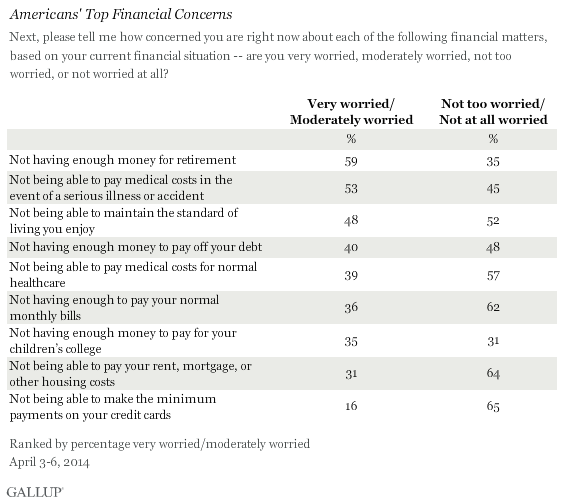
Americans' Top Financial Concerns
WASHINGTON, D.C. -- A firm majority of Americans, 59%, are worried about not having enough money for retirement, surpassing eight other financial matters. A majority of Americans have reported being "very" or "moderately" worried about retirement savings every year since 2001, illustrating that saving for retirement disquiets Americans in both good and bad economic times.
These results are from Gallup's annual Economy and Personal Finance poll, conducted April 3-6 this year.

The next top concern, not being able to pay medical costs in the event of a serious illness or accident, worries 53% of Americans. This is down from a record high of 62% in 2012.

Third on the list of Americans' top financial worries is not being able to maintain the standard of living they enjoy, with nearly half of the country's adults citing this concern. Together, retirement savings, unexpected medical costs, and maintaining one's standard of living typically top the list of the eight financial items that Gallup has tracked annually since 2001. Concerns about all three are down modestly from two years ago, but are still higher than they were before the Great Recession.
Americans' Top Financial Concerns, 2001 to 2014

Notably, four in 10 American adults say they are very or moderately worried about not having enough money to pay off their debt. This is the first time Gallup has included this financial issue. With as much as $1 trillion in outstanding student loan debt circulating in the U.S. today -- not to mention other prevalent types of debt such as credit cards -- debt concerns are clearly weighing on a significant proportion of the country.

Of the nine concerns tested, the bottom two concerns -- not being able to pay one's rent or mortgage, and not being able to make minimum payments on credit card bills -- are those most likely to indicate immediate insolvency. This finding suggests that most common financial problems are related more to savings and future expenditures than day-to-day living.

Middle-Aged Americans Most Worried About Retirement
Personal financial concerns vary significantly across age groups. The top problem for the broadly defined group of middle-aged Americans -- those aged 30 to 64 -- is not having enough money for retirement, in line with previous findings. For this group, about seven in 10 worry about not having enough money for retirement.
Americans' Top Financial Concerns, by Age
Young Americans aged 18 to 29 worry most about paying medical costs in the event of a serious illness or accident (52%), perhaps a result of the comparatively high uninsured rate for younger Americans or the lack of savings typically characterizing that age group. An equal share of 18- to 29-year-olds (52%) say they are worried about being able to maintain their standard of living. And nearly half of 18- to 29-year-olds worry about being able to pay off debt, perhaps a consequence of the massive amount of student loan debt that many young adults carry. Possibly befitting their youth and their longer distance in years from retirement, this group is least concerned about having enough money when they retire compared with other age groups -- despite dire predictions about the future of Medicare and Social Security.

Older Americans, those aged 65 or older, also worry most about being able to pay medical costs in the event of a serious illness or accident, though few in this age group lack health insurance. However, given the formidable cost of protracted, continual medical care that often characterizes older Americans' later years, many senior citizens may feel their health insurance alone cannot handle such a financial burden. Generally speaking, though, senior citizens are much less concerned about most of these financial problems than are their younger counterparts. The majority of older Americans appear to have retirement financing under control; 37% worry about having enough money in their retirement, by far the lowest percentage of any age group. Senior citizens are least concerned about not having enough money to pay for their children's college education (8%) -- presumably because older Americans already faced that challenge.

For Americans across all age groups, the ability to make minimum payments on credit card bills does not generate much concern.

Bottom Line
Retirement may be a time that many working adults look forward to, but it is paradoxically a source of stress in the here and now. A strong majority of Americans, particularly those aged 30 to 64, worry about having enough money for retirement, and this concern has regularly topped the list of Americans' top financial problems. The only other personal financial concern that a majority of Americans are very or moderately worried about is the ability to pay medical costs in the event of a serious accident or illness.

For a country that now has a life expectancy at birth of 78.7 years, retirement savings for post-work years is considered a matter of national importance. These concerns led President Barack Obama to propose a retirement savings account for working adults -- MyRA -- during this year's State of the Union address. It remains to be seen whether this new type of savings plan, which will be available in late 2014, will ultimately alleviate some Americans' concerns about retirement.

Survey Methods
Results for this Gallup poll are based on telephone interviews conducted April 3-6, 2014, with a random sample of 1,026 adults, aged 18 and older, living in all 50 U.S. states and the District of Columbia.
For results based on the total sample of national adults, the margin of sampling error is ±4 percentage points at the 95% confidence level.