Sunday, August 31, 2014

LAPD Identifies 2 Sergeants Who Killed Omar Abrego


LAPD Names Two LAPD Sergeants 

Involved in Struggle with Suspect Who Died


Omar Abrego died 12 
hours after his arrest

The Los Angeles Police Department has identified two Sergeants involved in a physical altercation with a 37-year-old motorist who died hours after his arrest.
The department identified the two officials involved in the Aug. 3 altercation with Omar Abrego as Robert Calderon and Jeff Mares, who are both assigned to the Newton Division Gang enforcement detail.


Abrego was declared dead 12 hours after he was arrested by Calderon and Mares,
according to officials. The Sergeants took Abrego into custody after they spotted
him driving fast in South L.A. and nearly striking a Pedestrian in a crosswalk, 
according to the Police Department.

A cause of death has yet to be released pending further tests, 
according to Los Angeles County Coroner's office.  The death is being
investigated by the LAPD's Force Investigation Division. An initial Coroner's
report says Abrego was combative and confused with acute cocaine intoxication,
 Harvey said.
Abrego suffered a severe concussion and multiple facial and 
body contusions in the incident, which also left one of the 
Sergeants with a broken hand.
richard.winton@latimes.com
carlos.lozano@latimes.com

Obama Keeps Stalling Senate-CIA Torture Tale

The Senate-CIA Fight on 

Interrogation Report

Saturday, 30 August 2014 11:41By Ali Watkins and Marisa Taylor, The Sacramento Bee | Report
2014 830 inter st(Image: Drewdlecam)Washington - The background of a key negotiator in the battle over a Senate report on the CIA's use of interrogation techniques widely denounced as torture has sparked concerns about the Obama Administration's objectivity in handling the study's public release.

Robert Litt, the general counsel for the Office of the Director of National Intelligence, is a former defense lawyer who represented several CIA officials in matters relating to the agency's detention and interrogation program. Now he's in a key position to determine what parts of the Senate Intelligence Committee's 6,300-page report will be made public.

Litt's involvement doesn't appear to be an ethics issue, at least by the legal definition. But experts say that while it may be acceptable on paper, his involvement in the review should have been a red flag.

"It does not cross the very low bar that the profession sets for an impermissible conflict of interest," said Jack Marshall, the president and founder of ProEthics Ltd., a national ethics consulting and training company that has provided seminars to Government lawyers, including those employed by the CIA. "But it is the kind of conflict of interest that should be avoided at all costs. The Government has to be held to a higher standard."

Litt, who's now 64, was confirmed to his post by the U.S. Senate in 2009, contingent upon his agreement to recuse himself from situations that involved his former clients. He referred to the potential conflict in his responses to the Intelligence panel's questions for the record, submitted during the course of his confirmation process.

"I represent several present and former Employees of the Central Intelligence 
Agency in matters relating to the detention and interrogation of suspected terrorists," Litt wrote to the committee in 2009. "By statute, under the rules of ethics and by virtue of my ethics agreement that has been provided to the committee, I will not participate personally and substantially in any particular matter involving these clients . . . including decisions about similarly situated individuals."

Despite his 2009 testimony, though, Litt has found himself in the middle of a heated dispute over a program that, according to his testimony, involved several of his former clients.

Litt's prior representations, however, didn't seem to bother Sen. Dianne Feinstein, D-California, who chairs the Senate Intelligence Committee and who 
approved the arrangement.

"I spoke with Bob Litt about this matter and believe he will be fair, and negotiations thus far have shown that to be the case," Feinstein said in a statement. "The DNI's designated Ethics official has reviewed the situation and determined there is no conflict that would necessitate a Recusal."

The Office of the Director of National Intelligence confirmed Feinstein's approval and denied that Litt's involvement violated his prior testimony.

"Consistent with his commitments, Mr. Litt has not participated in any decisions relating to the possible prosecution or investigation of his former clients, or any decisions that would affect the outcome of such matters," the office said in a statement. "In addition, he and the designated ethics official met with Chairman Feinstein to discuss the matter and she did not ask for his recusal in this matter."
The Director of National Intelligence's ethics official is Susan Gibson, Litt's principal deputy counsel at his current post.

The conversations between the Senate Intelligence Committee and the administration about Litt's past representations and their approval of his involvement effectively waive charges of a conflict of interest, at least by rules of the legal profession.

"If he advised them on their legal exposure by virtue of their conduct and this report blasts them for that same conduct, he should not participate with regard to that part of the report," said Stephen Gillers, a professor at New York University School of Law who specializes in legal ethics. "However, if everyone involved waives their objections, it wipes the slate clean."

All of Litt's former CIA clients also would have to waive a potential conflict, Gillers said. Administration officials wouldn't say whether that occurred.

While Marshall, the ethics consultant and a Washington lawyer, agreed that it didn't violate professional ethics regulations regarding conflicts, he said Litt's involvement in the negotiations raised "questions of transparency and fairness."

"It's wrong because it raises the specter of cover-ups, it raises the specter of coordinated stories and it creates the danger of an appearance of impropriety," he said.

"The public has a reason to be distrustful when it sees that kind of multiple representations," Marshall continued. "I think every lawyer in this situation has to look back and say, 'Do I have a conflict of interest at this moment with the duties of a government lawyer to the people of the United States of America? Does the public consent to this potential conflict of interest?' "

Citing attorney-client privilege, Litt declined in 2009 to name several of his clients who were involved in "nonpublic investigative matters." Later in his responses to the committee, he said that some of the matters for which he'd provided counsel to CIA officials were classified.

Neither the White House nor Feinstein's office would characterize Litt's prior representation during his time in private practice. When asked whether Litt had represented former senior CIA officials involved in the interrogation program, the Office of the Director of National Intelligence declined to comment, also citing attorney-client privilege.

According to reports in The Washington Post, Litt previously represented a CIA analyst, Alfreda Frances Bikowsky, who played a central role in the bungled rendition of Khaled el-Masri. El-Masri, who was revealed to be innocent, claimed to have been tortured by the agency.

While Litt's involvement appears to meet legal guidelines, it has nonetheless added to the criticism over the administration's handling of the report's public release.

"I have been concerned all along about conflicts of interest related to the declassification of the Senate Intelligence Committee's study," said Sen. Mark Udall, D-Colo., a member of the panel. "I urged the president in April to have the White House lead the declassification process instead of the CIA. . . . The redaction process has not been conducted in accordance with my request, and I remain concerned about who continues to lead and drive the process."

It's been a long, difficult history for the panel's study on the CIA's interrogation and detention program, which has been a source of major deterioration in the relationship between the agency and the Senate oversight committee. The report's executive summary is nearing public release. But the White House and its chief spy agency have effectively stalled even that process.

The Intelligence panel began compiling the report on the CIA's post-9/11 detention, rendition and interrogation program in 2009. The Report, although completed in 2012, has been held hostage because of fierce debates between the agency and the panel.

Those disputes culminated last month when the (CIA) Agency revealed that it had spied on the computers of Committee Staffers who were compiling the report. The CIA also revealed that, during the course of the spying, CIA officials had falsified evidence against the Committee Staffers in order to charge them with mishandling Classified Information.

Feinstein's panel voted to de-Classify the nearly 500-page executive summary of its report in April, but that's been indefinitely halted because of disagreements over the Report's blackouts. 

The document that was returned to the committee after the executive branch's declassification review was rendered incomprehensible due to redactions, 
according to Feinstein and several of her Democratic Committee colleagues.

The crux of the redactions, officials said, are the pseudonyms used to identify CIA officials involved with the program.  

Feinstein and several of her fellow Democrats appealed to the White House that
it _ not the agency _ lead the declassification process for the executive summary.

Their appeals fell on deaf ears, as the White House has deferred to the CIA 
Agency's leadership throughout the declassification effort. White House National Security Council representative Caitlin Hayden defended Litt's involvement, as well.

"Bob Litt is one of the Administration's strongest proponents of transparency in intelligence, consistent with our National security, and he and we are fully committed to ensuring there is no conflict of interest as the Administration continues to work to see the results of the committee's review made public," Hayden said in a statement.

Accusations of conflict and mishandling have plagued the committee's report for months. Litt's involvement is just the latest controversy. In an explosive floor speech in March, Feinstein revealed that the CIA lawyer responsible for filing the falsified crimes report against her Staffers, Robert Eatinger, is named more than 1,600 times in the Report.

Tish Wells contributed to this article.
This piece was reprinted by Truthout with permission or license. It may not be reproduced in any form without permission or license from the source.

Saturday, August 30, 2014

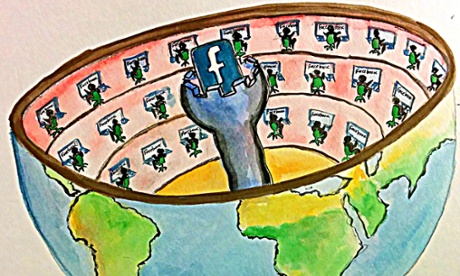
Facebook Posts Can Land You on Terrorist List

The US Government can Brand you a Terrorist based on a Facebook Post. 

Innocent people’s lives are being ruined. 
Why isn’t anyone watching the watchlist? 

facebook surveillance illustration
Reasonable suspicion is based on a circular logic – people can be watchlisted if they are suspected of being suspected terrorists – that is ultimately backwards, and must be changed. Illustration: Joelle L / Flickr via Creative Commons Illustration: Joelle L / Flickr via Creative Commons
The US government’s web of surveillance is vast and interconnected. Now we know just how opaque, inefficient and discriminatory it can be.
As we were reminded again just this week, you can be pulled into the National Security Agency’s database quietly and quickly, and the consequences can be long and enduring. Through ICREACH, a Google-style search engine created for the intelligence community, the NSA provides data on private communications to 23 government agencies. More than 1,000 analysts had access to that information.
This kind of data sharing, however, isn’t limited to the latest from Edward Snowden’s NSA files. It was confirmed earlier this month that the FBI shares its master watchlist, the Terrorist Screening Database, with at least 22 foreign governments, countless federal agencies, state and local law enforcement, plus private contractors.
The watchlist tracks “known” and “suspected” terrorists and includes both foreigners and Americans. It’s also based on loose standards and secret evidence, which ensnares innocent people. Indeed, the standards are so low that the US government’s guidelines specifically allow for a single, uncorroborated source of information – including a Facebook or Twitter post – to serve as the basis for placing you on its master watchlist.
Of the 680,000 individuals on that FBI master list, roughly 40% have “no recognized terrorist group affiliation”, according to the Intercept. These individuals don’t even have a connection – as the government loosely defines it – to a designated terrorist group, but they are still branded as suspected terrorists.
The absurdities don’t end there. Take Dearborn, Michigan, a city with a population under 100,000 that is known for its large Arab American community – and has more watchlisted residents than any other city in America except New York.
These eye-popping numbers are largely the result of the US government’s use of a loose standard – so-called “reasonable suspicion” – in determining who, exactly, can be watchlisted.
Reasonable suspicion is such a low standard because it requires neither “concrete evidence” nor “irrefutable evidence”. Instead, an official is permitted to consider “reasonable inferences” and “to draw from the facts in light of his/her experience”.
Consider a real world context – actual criminal justice – where an Officer needs reasonable suspicion to stop a person in the street and ask him or her a few questions.  Courts have controversially held that avoiding eye contact with an officer, traveling alone, and traveling late at night, for example, all amount to reasonable suspicion.
This vague criteria is now being used to label innocent people as terrorism suspects.
Moreover, because the watchlist isn’t limited to known, actual terrorists, an official can watchlist a person if he has reasonable suspicion to believe that the person is a suspected terrorist. It’s a circular logic – individuals can be watchlisted if they are suspected of being suspected terrorists – that is ultimately backwards, and must be changed.
The government’s self-mandated surveillance guidance also includes loopholes that permit watchlisting without even showing reasonable suspicion. For example, non-citizens can be watchlisted for being associated with a watchlisted person – even if their relationship with that person is entirely innocuous. Another catch-all exception allows non-citizens to be watchlisted, so long as a source or tipster describes the person as an “extremist”, a “militant”, or in similar terms, and the “context suggests a nexus to terrorism”. The FBI’s definition of “nexus”, in turn, is far more nebulous than they’re letting on.
Because the watchlist designation process is secret, there’s no way of knowing just how many innocent people are added to the list due to these absurdities and loopholes. And yet, history shows that innocent people are inevitably added to the list and suffer life-altering consequences. 
Life on the master watchlist can trigger enhanced screening at borders and airports; being on the No Fly List, which is a subset of the larger terrorist watchlist, can prevent airline travel altogether. The watchlist can separate family members for months or years, isolate individuals from friends and associates, and ruin employment prospects.
Being branded a terrorism suspect also has far-reaching privacy implications. The watchlist is widely accessible, and government officials routinely collect the biometric data of watchlisted individuals, including their fingerprints and DNA strands. Law enforcement has likewise been directed to gather any and all available evidence when encountering watchlisted individuals, including receipts, business cards, health information and bank statements.
Watchlisting is an awesome power, and if used, must be exercised prudently and transparently.
The standards for inclusion should be appropriately narrow, the evidence relied upon credible and genuine, and the redress and review procedures consistent with basic constitutional requirements of fairness and due process. Instead, watchlisting is being used arbitrarily under a cloud of secrecy.
A watchlist saturated with innocent people diverts attention from real, genuine threats. A watchlist that disproportionately targets Arab and Muslim Americans or other minorities stigmatizes innocent people and alienates them from law enforcement. A watchlist based on poor standards and secret processes raises major constitutional concerns, including the right to travel freely and not to be deprived of liberty without due process of law.
Indeed, you can’t help but wonder: are you already on the watchlist?

Thursday, August 28, 2014

Russia Announces Latin America is Key Pillar Like USA, EU, BRIC

Russia: Latin America is one of the Pillars of the New World Economy

T


Latin America is one of the pillars of the new world Economy, says Russian Foreign 
Minister Sergey Lavrov, stressing that his country cooperates with all Latin American
countries, especially Brazil, Argentina, Cuba, Chile, 
Peru and Venezuela. 

Rapprochement between Russia and Latin America
A trade mission from Argentina to Russia angers EU
Ecuador does not ask permission to trade with Russia
Ecuador studying wish list of exports to Russia

The Russian Foreign Minister addressed a Youth Forum in Seliguer.  The Community of
Latin American and Caribbean States (CELAC) is setting a trend to create a
multi-polar world. "Latin America is No. One in growth, and is actively being
developed, and has a very good future, and already is one of the pillars of 
the New World Economy," he said.

In that sense, Lavrov stressed that the Countries' political and economic organizations,
"are actively developing an integration process".

"There is no country outside of one organization or another, at least one organization
for integration, and we have relationships with each of these partnerships and
with all countries, without exception, in Latin America," said the Russian Foreign minister.

Also Lavrov has proposed both Russia and Latin American countries will be
studied.  From now on, there will be more frequent Official visits, and he recalled
that Russia has already formed commissions on inter-Nation trade and 
cooperation with many of the Latin American countries. 

Referring to the cancellation of 90% of the debt that Cuba had contracted 
with the Soviet Union, the chancellor noted that this move will help increase the
growth of the Cuban economy. "Not everything can be measured with money.
We waited a long time to forgive much of the Cuban debt and, ultimately, decided
to help," said the Minister, noting that the current debt represents about 
3.5 Billion dollars.  It will be invested in the island with the support of 
Russian companies. 

Russian Foreign Minister recalled the historical tour of Latin America a month
after President Vladimir Putin, during which he toured countries such as Cuba, 
Argentina and Brazil, participated in the summit of the BRICS and an additional
forum with 12 leaders of South America. The extensive import-export 
program of President Putin outlines areas such as energy, transportation, 
defense, space and heavy machinery, areas of great interest to all 
Countries addressed. 

Meanwhile, Lavrov stressed that the US, European Union and Russia must help
efforts to eliminate global threats. "Our collective on the international stage 
will be to eliminate all these threats and challenges.

We also hope to restrain the intentions of the USA, and the West to retain 
its dominance in the world, a position to which they have become accustomed
over several hundred years.
The US artificially delays and prevents the arrival of a multi-polar and poli-central 
world, reflecting the actual objective conditions of the development world, "he said. 


Pentagon Demanded a War on Syria, now a War on Syria's Enemy, ISIS

Let's Treat Assad Fairly - Like Any Other Pro-West Dictator in the Middle East

Wednesday, 27 August 2014 14:39By Robert Naiman, Truthout | Op-Ed
2014 827 assad fwA portrait of President Bashar al-Assad on a street in Homs, Syria, March 23, 2014. (Photo: Sergey Ponomarev / The New York Times)

Glenn Greenwald thinks it's funny that while a year ago, we were told that it was an absolute emergency to bomb Syrian President Bashar al-Assad and arm insurgents fighting to overthrow him, now we're being told that it's an absolute emergency to bomb Assad's main military opponents. Greenwald concludes that the mainconstant of US foreign policy is that we always have to bomb people; exactly whom we have to bomb right now is much less important.

I don't dispute Greenwald's thesis as far as it goes, but there is another important way to look at the situation, which is that appearing to commit the US government to the project of overthrowing the Syrian government was a poorly-thought through and deeply immoral strategic blunder in the first place, and now we have a strategic opportunity to correct that historic blunder. "Never let a good crisis go to waste," as the saying goes; this crisis is a good opportunity to "shake the etch-a-sketch" on the foolish and dangerous idea that the US government had an obligation to overthrow the Syrian government.

If we take the statements of US government officials and members of Congress about non-democratic US allies in the region at face value, or even if we look at actual US engagement on democracy and human rights with these allies, it's a lie to say that the only choices in Syria are "overthrow the Syrian government" or "forget about human rights and democracy."

I will pass over, as Cicero said, the question of the Israeli occupation of the West Bank, Gaza and East Jerusalem.

Consider instead cases that are more obvious from the point of view of the majority of Americans: Saudi Arabia, Egypt, Jordan and Bahrain are not democracies by any meaningful definition of the term; they are all committing grave violations of human rights, and yet we are not seeking to overthrow their governments. Turkey is a democracy with severe human rights issues. Iraq and Iran are "majority rule" countries (more than you can say for Bahrain) that have severe human rights issues, which in the case of Iraq, are generally conceded to be a key cause of the fact that the Iraqi government has lost control of Sunni Arab areas to Sunni Arab insurgents.

If we were to ask US officials, "Does the fact that the United States is not seeking to overthrow these governments mean that the United States is not trying to promote democracy and human rights in these countries?" they would say no, and they would not be lying. They would, if they were being fully honest, say that we are dealing with these countries on a case-by-case basis, and subject to the constraints of the facts that our "national security concerns" take first priority, and the fact that our ability to influence these countries varies, we are doing what we can to promote democracy and human rights in these countries.

We can and should dispute whether the United States is doing everything it can in these countries to promote democracy and human rights subject to those constraints - fuzzy constraints which are notoriously subject to tendentious interpretation. But suppose we take it as a given that this is how US officials and people who have influence on them view the situation. Why would it be a moral outrage to view Syria the same way?

Suppose that, from now on, we adopt the following policy with respect to democracy and human rights in Syria: "Subject to the fact that our national security concerns take first priority, and subject to the degree of influence we have in Syria, we will do what we can in Syria to promote democracy and human rights." That is, suppose we were to adopt the same policy in Syria that we have with respect to other non-democracies and human rights abusers in the region. Why would that be a moral outrage? Why should our unwillingness to commit to overthrowing the Syrian government be a litmus test of our commitment to promoting democracy and human rights?

In particular, given what happened in Libya (among many other examples) after the United States helped overthrow Libya's government, shouldn't we question the automatic assumption that US overthrow of a government automatically leads to an improvement in the human rights situation in the country from the point of viewof the country's residents? And what other point of view should have greater weight than the views of the country's residents?

Finally - and perhaps most importantly - recall that a year ago, the argument that was supposed to be trumping inside Washington for bombing the Syrian government was that it was necessary to "confront Iran."

Well, Iran is our most powerful ally on the ground right now on the issue of the day, confronting the so-called "Islamic State" Sunni Arab insurgency. Haggling over boring technical details continues indefinitely in the negotiations over Iran's nuclear program. What's the urgency now, or in any future that we can see, to "confront Iran" by overthrowing the Syrian government?

Copyright, Truthout. May not be reprinted without permission.

ROBERT NAIMAN

Robert Naiman is policy director at Just Foreign Policy and president of Truthout's board of directors.